

Cattle Depredation Claims Far Exceed State Budget
Trevor Phipps
When it comes to wild wolves preying on livestock and threatening animals on private property, the Ute Pass region has remained safe, for the most part.
Ever since wolves were released in late 2023, following a state ballot proposal that got narrowly approved, many ranchers and rural property owners have grappled with a high number of livestock depredations
But luckily for local ranchers, the wolves basically decided to avoid Teller and El Paso Counties– until now.
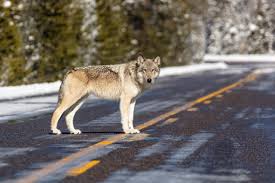
Last year, Teller County experienced its first wild wolf visit when a lone female wolf entered Teller County in February 2025. During the incident last year, a female wolf entered the western side of the Florissant Fossil Beds and then left after not staying very long. According to officials, the female wolf was wondering around the state in long distances most likely searching for a mate
According to recent wolf behavior, something similar happened again recently. The newest wolf data shows wolf activity close to the Front Range in Douglas, Teller, El Paso, Fremont and Pueblo Counties.
The wolf map released on February 25, shows multiple watersheds nearby that at least one wolf traveled inside between Jan. 27 and Feb. 24. The wolf map shows activity around Pikes Peak and in northern Teller and Southern Douglas counties.
According to County Commissioner Dan Williams, the Colorado Parks and Wildlife Division (CPW) did contact Teller officials when the collar first showed that a wolf entered the region. Williams said that Teller County received another visit by a lone female wolf.
“It was a female with erratic behavior,” Williams said. “It traveled north of Divide, and there were no predations reported. It came the closest to Teller County Commissioner Bob Campbell’s house (located in the Divide area).”
Williams said that the collared female wolf was traveling long distances alone in short time periods. Williams said that the wild wolf visit didn’t last long as the wolf left the region a day or two after it arrived.
Williams said that CPW notified Teller County officials and major landowners when a wolf visited just like they are supposed to. He confirmed that the wolf came and left the Ute Pass and Pikes Peak regions without any casualties of livestock or pets.
During the wolf’s journey through Teller County, it also ventured further south and east than any other collared wolf has since the 2023 reintroductions. The wolf entered the watershed that encompasses Canon City and the Royal Gorge as well as Pueblo, Custer, Alamosa and Huerfano Counties.
So far, Teller County hasn’t experienced any loses of livestock or pets at the paws of wild wolves. But unfortunately for those in other parts of the state, livestock deaths have been a frequent occurrence in some regions.
Depredation Claims Double Budgeted Amount
Last month, it was announced that CPW approved compensation claims for wolf depredations of just over $700,000. The large number ended up coming in at over double the allotted $350,000 that the state gives out of the general fund to compensate ranchers for direct and indirect losses to wolves.
“CPW said it will cover awarded claims above the $350,000 with various funds that do not include revenue generated from the sale of hunting and fishing licenses,” the Fort Collins newspaper The Coloradoan reported.
And even though the compensation number seems very high, the $700,000 that CPW recommended to be compensated to ranch and property owners does not include every depredation claim submitted to the CPW commission. CPW also recommended that three claims totaling $53,611.71 be denied. The commission will decide soon whether or not to award the compensation to landowners who claim to have suffered losses due to wild wolves.
However, that amount still doesn’t include every depredation claim that was submitted to CPW in 2025. In fact, there are another $300,000 worth of claims that have not yet been brought to the commission
“There were 38 livestock, including cattle, sheep and a working cattle dog, confirmed by CPW to have been killed or injured by wolves during 33 depredation events in 2025, according to CPW’s wolf depredation site,” an article in The Coloradoan stated. “Some of those claims were previously settled, some are pending and some will result in the rancher not submitting a claim.”
Wolf Deaths on the Rise; Pressure Growing to Suspend Program
Last month it was reported that, yet another wolf relocated from British Columbia, Canada had passed away during a routine collaring operation. The batteries had died on the collared wolves, and they were captured so that the batteries could be replaced.
However, the necropsy performed on the wolf proved that the animal died due to the process involved in capturing the male wolf 2305 in the wild. “These complications led to acute cardiogenic shock which could have been exacerbated by several different factors including hyperthermia, exertional/capture myopathy, respiratory distress or drug reaction,” a press release issued by CPW stated.
With the amount of wolf deaths, coupled by cattle kills, momentum has been building to put a pause on the wild animal reintroduction program, or even to give it the axe on a temporary basis. In addition, tensions between the White House and Colorado have further complicated the situation. Even U.S. Senator Michael Bennett, who is running for governor, wants to suspend the wolf reintroduction program. That comes from a fairly liberal Democrat who has supported most wild animal preservation efforts. Bennet told a newspaper on the Western slope that the program has not rolled out as smoothly as anticipated.
Leaders of the Divide-based Colorado Wolf and Wildlife Center, though, have continued their support for the wolf reintroduction pursuit, via frequent Facebook posts, The group has stressed the ongoing benefits of the effort, originally established to create a healthier ecosystem. They have cited big problems for the current group of wild wolves if the program suddenly stops.