Public Hearing Slated for This Thursday to Decide on Fund to Help RE-2 District
Trevor Phipps
Last year, the Woodland Park City Council made the decision to abruptly end the voter-approved 1.09 percent sales tax increase that went to the Woodland Park RE-2 School District.
Now after the tax has been removed, school officials say that the district faces significant financial distress with the loss of approximately $3 million in sales tax revenue provided to the schools annually.
Over the past few weeks, many citizens in the community launched an effort to put a 0.5 percent sales tax increase on the ballot. This time, though, the tax increase would only go towards facility improvements. More specifically, how the money is spent would be closely monitored.
But after several weeks of gathering signatures to get the tax increase on Woodland Park’s November ballot, the effort failed, mainly due to a rather stringent deadline to obtain autographs from registered WP voters.
However, in a recent meeting, the council acknowledged that the school district faces a major financial problem. And instead of pursuing the more ambitious tax hike, they signaled the green light for a more moderate ballot proposal that would only raise sales taxes by .25 percent.
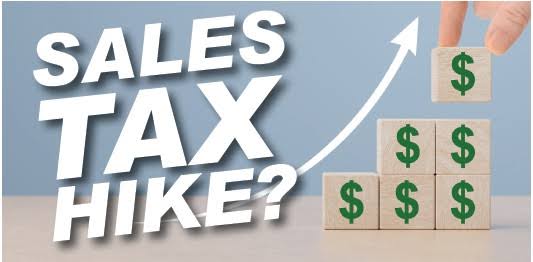
After much debate, the council chose to table the 0.5 percent tax increase that was originally proposed by the citizens’ initiative (action that basically killed this plan). Instead, they opted to send the proposed 0.25 percent tax increase plan to the final, public hearing stage. The hearing is scheduled for Thursday, Sept. 3. If the council approves the ballot plan, the tax hike will be decided by Woodland Park voters in November.
Using Another Sales Tax to Help Fund Local Schools
Although the decision to basically kill the plan proposed by the citizens was not unanimous, many council members expressed concerns that a .5 percent increase would be too much for many residents. Instead, more support occurred for the approving the lower rate.
“Most of the people in this room have a privilege that a 0.25 percent tax increase isn’t really going to change our world much,” Councilmember Jeffrey Geer said at the Aug. 20 session. “But at the same time the cost of food, inflation, everything, it’s significant. And there are a significant amount of families in Teller County that are struggling to make ends meet now as it is.”
Council members said they find themselves in a difficult spot between keeping the city’s sales tax rate affordable, while also taking steps to support students in the community. Moreover, the council agreed that their actions last year in killing the original sales tax did put the school district in a difficult financial position.
However, some elected leaders don’t like the idea of using a sales tax to help fund the school district. “Sales tax is not the proper way to fund a school,” Woodland Park Mayor George Jones said. “It just isn’t.” The mayor noted that only four school districts in Colorado use this funding technique. Two of those include the gaming communities of Cripple Creek and Black Hawk, which have much different school challenges than Woodland Park.
What the Tax Will Fund
On September 3, the Woodland Park City Council plans to hold a public hearing on Ordinance No. 1532, calling for voters to decide the fate of a .25 sales tax increase to help the school district.
If the council votes to put the issue on the ballot, the city’s sales tax rate will rise from a total of 8.4 percent to 8.65 percent on January 1, 2027. The extra sales tax collected will then be put into the “Supporting All Our Schools Reimbursement Fund.”
However, this time around, the sales tax increase will be much different than the previous one that was axed by the council in 2025. Instead of the money going directly to the district to be used for anything, the new ordinance specifies that the money can only be used for certain expenses. Mainly, it would be used strictly for facility-related improvements and what is specifically outlined in the proposed ordinance.
Plus, the tax would only last for five years.