

Update: SB 26-164 has since been removed from consideration this year by the bill’s sponsors.
Lawmakers May Loosen Laws on Cannabis-Infused Beverages
Trevor Phipps
Those who like to go out for a cocktail in Colorado now might gain an option that offers a different kind of buzz.
Moreover, those who don’t wish to partake in alcohol can instead enjoy a cold one infused by THC (the main ingredient in cannabis).
Although it is far from being official, state lawmakers are currently debating a new bill related to legal marijuana. Although recreational marijuana has been legal in Colorado for a decade, lawmakers are looking at reducing regulations that restrict where THC products can be sold.
Currently, marijuana can only be sold to those over age 21 at a licensed recreational dispensary or over 18 with a medical license. The dispensaries offer several different types of cannabis products and don’t have many regulations on what or how strong of products they can sell.
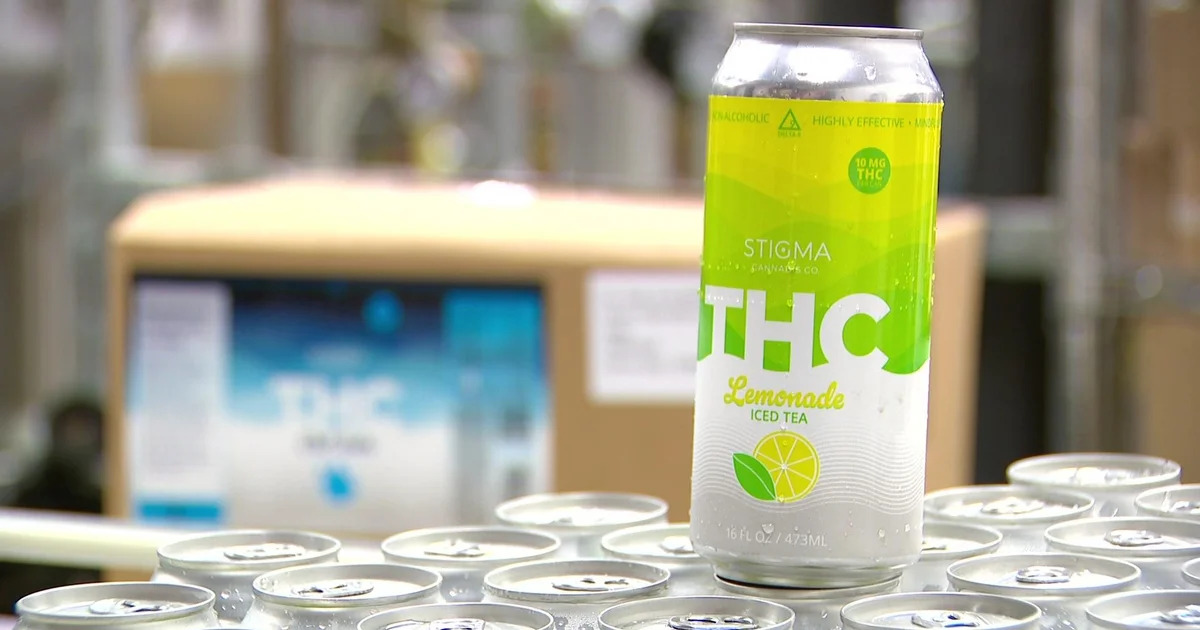
Currently, the state allows other places to sell cannabis beverages, but with a low THC-level limit. State regulations currently allow beverages with 1.75 milligrams or less to be sold at bars and restaurants. However, Colorado could soon raise these levels like some other states have done.
On April 16, the state Senate introduced Senate Bill 26-164 titled “Regulation of Lawful Tetrahydrocannabinol (THC) Beverages” to the Senate’s Finance committee. The legislation attempts to create the state’s first definition of a “lawful THC beverage.”
The bill’s main purpose is to raise the strength of cannabis drinks that bars and restaurants are allowed to offer. If passed, drinks with up to 10 milligrams of THC could be sold at bars, restaurants and concert venues. Grocery and convenience stores would be permitted to sell beverages with a maximum of three milligrams.
The new law would require that all of the THC found in the beverages come from a lawful source of hemp. Establishments wishing to sell legal marijuana beverages would be required to get a special license to do so through state regulatory agencies.
The rules would then be the same as the regulations surrounding alcohol. Everyone wishing to purchase a cannabis drink would have to be at least 21 years of age. Further, nobody visibly intoxicated could purchase a THC beverage.
A Way To Reduce Regulations and Generate Tax Revenue
Some lawmakers and bill advocates tout the new law as a win-win situation for Colorado’s government and hospitality industry. “The permits themselves would not be prohibitively expensive for restaurants and bars. The real revenue, which could be as high as $55 million in new revenue, will be produced on tax,” Brian Vicente a lawyer who specializes in psychedelic and cannabis issues in Colorado told Denver 7. “It’d be a 10% excise tax and 10% sales tax and then 2.9% typical state tax. So, we’re looking at about 23% state tax.”
One of the bill’s main sponsors, Democrat state Senator Julie Gonzales said she views the bill as mutually beneficial since the state’s beverage market has already shown a demand for lower strength THC beverages. “When this idea was first presented to me, I thought, ‘Wow, this would be a win-win situation for everyone involved,'” Gonzales said, according to Denver 7. “Both creating millions of dollars in potential revenue to help address our structural deficit, but then also creating new opportunities and avenues for these beverages to come to the market.”
However, the bill has already experienced opposition in its short life span. The organization called One Chance to Grow Up that fights to protect children from marijuana spoke out against the proposed law. The organization stated that if SB 26-164 gets passed, the bill would make cannabis products more accessible to those underage than they already are.
Some people involved in the state’s alcohol industry have also spoken out against the bill. Skyler McKinley, who owns a tavern in Routt County (Northern Colorado) and helped write the state’s marijuana regulations when Colorado became the first state in the country to legalize recreational use of the drug, wrote a lengthy opinion article published by the Denver-based Westword publication against the bill.
Overall, McKinley doesn’t think that selling alcohol and THC drinks in the same establishment is safe for consumers.
“Nearly 100 years of science gives bartenders a good rule of thumb for assessing the impacts of alcohol: A standard drink is a twelve-ounce beer, a five-ounce pour of wine or an ounce and a half of spirit,” McKinley stated in his column. “Each one adds roughly 0.02 percent to a patron’s blood alcohol, and the body burns off about one standard drink an hour. This is the same math behind every 0.08 percent per se law in the country, and it’s what every bartender learns during responsible vendor training. We’ve got nothing like that for THC. Not because researchers haven’t tried, but because, as the National Highway Traffic Safety Administration told Congress in 2017, research can’t predict THC impairment with dosage the same way it can with alcohol.
The legislation also will undoubtably encounter major opposition from local law enforcement leaders in the Pikes Peak region, who have consistently opposed plans to expand the recreational cannabis market.