

GOP Primary Contest May Determine Heated Race
Trevor Phipps
Now that Election 2026 fever has officially struck the high country, the biggest county competition could become the race for the District 2 Teller Commissioner seat.
This position, currently held by term-limited Bob Campbell, has resulted in three candidates jumping into the election arena to fill Campbell’s shoes.
Like most county elections, the seat up for grabs will most likely be resolved during the Republican primary election in June. However, the election action heads into high gear during the GOP caucus process this week, and then the county GOP assembly later in March. These contests can play a key role in determining which candidates get on the ballot or earn the front-runner position. However, candidates can also petition their way onto the ballot, and don’t necessarily have to pursue the caucus and assembly route, a pathway some successful Teller office-holder candidates have taken in the past.
Ultimately, the primary election will most likely determine the next District 2 County Commissioner.
This year, the three candidates come from various backgrounds, with one contender serving as a previous county commissioner. All three are heavily involved in the community in the form of various groups, clubs and organizations.
Since all of the candidates are Republicans, they share many of the same beliefs and ideals, but they all differ when it comes to certain topics and priorities. The following is a brief description of the candidates’ background and why they say they sought to run for office in 2026.
Carl Andersen
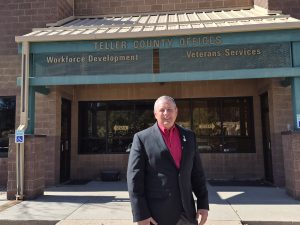
Andersen has been well-known in the community for quite some time as he owns multiple local businesses, and he is heavily involved in organizations like the Ute Pass Kiwanis. Being the former head of the Teller County Republican Party, this isn’t Andersen’s first campaign, but he says he is more ready to serve now than in the past.
Andersen notes he is eight years older and much more experienced than the last time he ran for county commissioner. As a result, Andersen believes he is better prepared to serve in the position. He said that instead of retiring, he wants to serve the community to help protect the younger generations who are unable to be deeply involved in politics due to work and family obligations.
Andersen said that he feels the biggest issue facing Teller County is the loss of local control. He said that in the last couple of years all of the counties in Colorado have had their power stripped away inch by inch by the state government.
“I think one of the priorities for county commissioners today and into the future is being up in Denver fighting for local control and not letting the state take away our building departments and our planning departments,” Andersen said. “All of those little things that seem like not a very big deal become a very big deal when the state comes in and says, ‘We’re all going to do the same thing,’ and yet every county is different. Teller County is not the same as Denver Broomfield, Pueblo or Colorado Springs even.”
Dave Paul
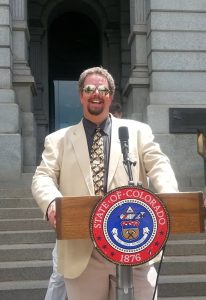
Paul previously served as county commissioner between 2011 and 2019 after he ran in the 2010 and 2018 elections unopposed. For the last eight years, Paul has been involved in various organizations including the Rotary club and the Northeast Teller County fire board.
Paul said that he decided to run so that he could use his prior experience as county commissioner to help the county move forward into the future. More recently, Paul said that he has learned even more about government operations through his current role as executive director of the Upper Arkansas Area Council of Governments.
“This particular slot is kind of important because the other two commissioners are term-limited out,” Paul said. “It’s tough to find people and working where I am, I am getting such an education about other parts of rural Colorado and really what can happen if you don’t have some experienced people either on staff or elected or both. If you don’t have it you’re blind. Right now, Lake County has three new commissioners, no assessor, a new county manager, a new treasurer and a new finance director. And they are smelling their way because there is no training, there’s not even a book. When you’re county commissioner you kind of create your own job description and that’s how you do it.”
Paul also cited the loss of local control over Teller’s building situation as a major issue facing the county. He believes that working with fellow commissioners can get things accomplished better than what an individual state lawmaker can do.
Aaron Helstrom
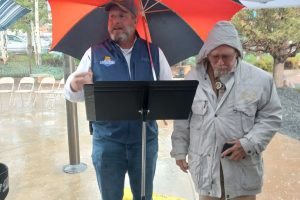
Helstrom is a retired Marine who spent his career solving difficult problems for the U.S. military. Post-retirement, Helstrom plans to use his knack for coming up with solutions to make the county better.
Helstrom said that he made the decision to run for county commissioner because he wanted to see efficiencies and accountability restored at the county level. He said that he wants to help the community build resiliency so that it is better equipped to handle adverse situations in the future.
“When I look at what is the biggest threat to this county that will impact all citizens of this county regardless of political affiliation, that is a catastrophic wildfire,” Helstrom said. “When you look at Teller County, we are in the top one percent of counties in the United States for catastrophic wildfires coming through. When a wildfire hits it impacts the poorest, the low income and middle-class families. When that fire comes through 40 percent of your low to middle class income people are so impacted that they will never return to that county.”
However, Helstrom said that he believes the solution is better fire mitigation practices. Helstrom said that the solution to finding the workforce for better fire mitigation without raising taxes is to start teaching people about mitigation techniques when they are young. Helstrom plans to launch a conservation camp to teach students about proper fire mitigation practices and firefighting techniques.