Sparks Expected to Fly at County Public Hearing This Thursday
Trevor Phipps
During the last two years, the Teller County Commissioners have considered ways to regulate short-term rental (STR) properties.
After a slew of public meetings and the return of 800 surveys, the county commissioners drafted a proposed STR ordinance that would make owning an STR property legal, and a right that adhered to county’s land use laws. Previously, STRs were never addressed in county regulations, raising questions about their legal use.
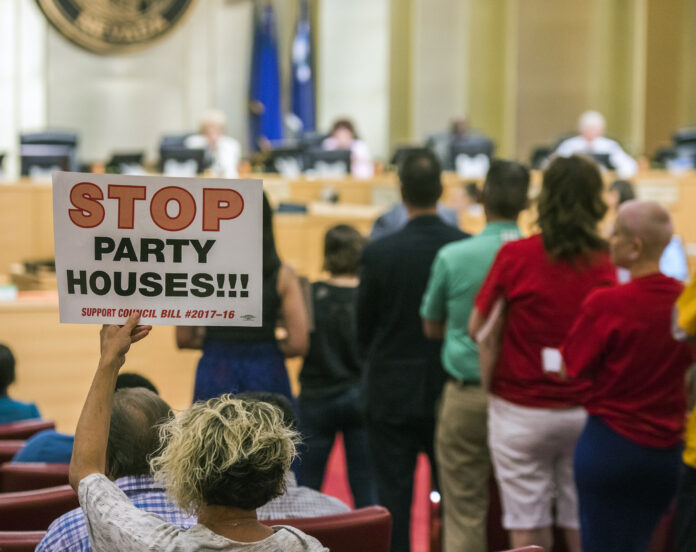
The proposed STR ordinance had its first reading last month and is now scheduled for a public hearing this Thursday. This meeting could attract a record crowd, based on comments made on social media outlets and concerns voiced throughout the county. Also, the controversial nature of this week’s hearing could set the stage for a marathon session.
From the beginning, county commissioners said that they listened to both sides of the controversial issue. Moreover, they wanted to come up with a way to regulate STRs to appease some residents’ concerns and “do no harm” to those in the county who currently own and operate STR businesses within unincorporated Teller County.
However, once the proposed ordinance got posted in a public notice after the first reading, social media outlets erupted with many county residents speaking out against the proposed new regulations. Many claim that the ordinance violates the property rights of residents and does potentially harm to some who currently own STRs.
Many residents cite certain parts of the ordinance and contend the proposed rules could force those who are running current STR operations out of business. For one, outlawing the use of Accessory Dwelling Units (ADUs) or a small, independent secondary home located on the same property as a primary single-family residence could harm those who currently use ADUs as STRs, according to many STR operators. Secondly, the stipulation that there can be only one licensed STR on a property will also harm those who currently have large properties with multiple STRs, note opponents of the county’s ordinance.
Some residents have said that the proposed ordinance negatively affects current STR owners, despite county leaders vowing to come up with rules that wouldn’t impact current STR operators. And some pro-STR advocates argue that some residents in neighborhoods, who oppose these units, won’t be happy until STRs get banned within the county.
Violations to Private Property Rights
Following the release of the ordinance’s first reading, local real estate agent Mary Sekowski made a lengthy post on social media outlining the sections of the proposed ordinance that could harm current STR owners. While the issue was being debated in Woodland Park a few years ago, Sekowski was a major voice against any STR regulations.
In fact, she is currently in the middle of appealing a district judge’s decision in a lawsuit she filed against the city, claiming that the city’s citizen-proposed STR regulations were unlawful and unconstitutional.
Sekowski claimed that the county’s contention that STRs were never legal in the first place could cause legal implications. She also argued that the 10 percent cap on licensed STRs in the county’s subdivisions imposed unlawful limits. As a result, she believes this could prevent otherwise compliant landowners from using their properties as STRs.
In addition, Sekowski said that the ordinance goes against the rights of STR owners by requiring them to own the home for a year before obtaining an STR license. She also didn’t like the fact that if passed, STR owners won’t be able to transfer their license to a new property owner. She said that forcing new property owners into waiting a year after purchasing an STR property could lower the selling value of the property.
The real estate agent, who last spring, tried to seek a seat on the Woodland Park City Council, also questioned proposed rules outlawing STR occupants from having fires, riding ATVs, etc. That stipulation creates “unequal treatment of identical residential activities,” she said.
Staying the Course
Throughout the entire process, the commissioners have emphasized the fact that coming up with STR regulations in Teller County has been a long process, and one that they have done with due diligence. During the first reading of the ordinance, the commissioners refused to respond to public comments that discussed individual situations regarding the new STR regulations. Further, they have refused to respond to people directly, calling out problems with comments made on social media.
The county commissioners have stressed that they believe they have done their due diligence and tried to listen to all sides of the issue. They say their goal has been to come up with regulations that appease some resident concerns about STRs in their residential neighborhoods, while not enacting rules that would harm the large number of current STR owners.
In fact, a few local media representatives have questioned the lengthy process.
The county commissioners, though, say they by extending the process over a two-year period enabled them to come up with legislation that addresses concerns on both sides and one that strikes a balanced approach.
“We continue to listen to everybody,” Teller County Commissioner Dan Williams said. “And we have a good product. We have heard that from most folks. We will continue to listen all the way to the end. But with that being said, what we are trying to do is find a balance between those that don’t want (STRs) and those who already have them.”
The new STR law is slated to go into effect later this year.