Teller County Commissioners
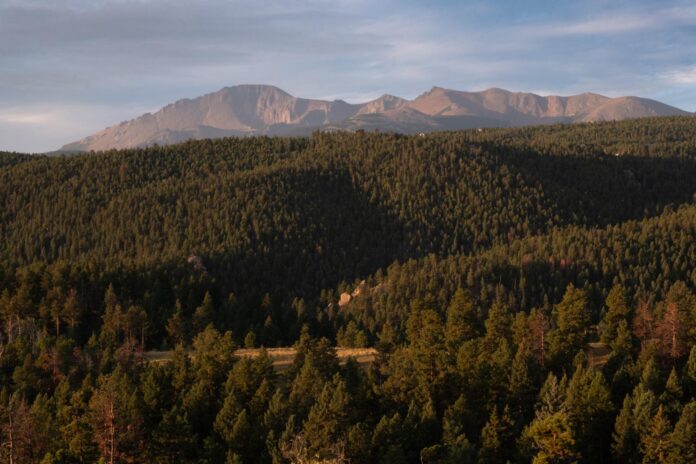
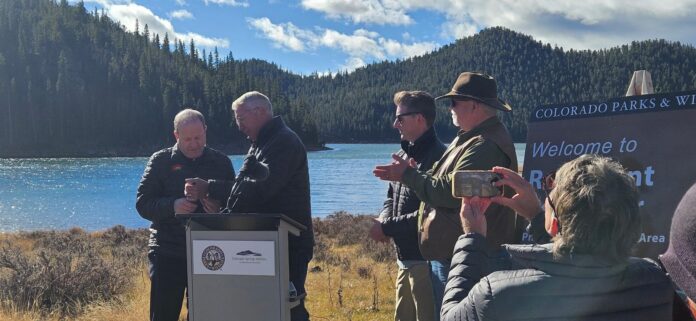
The event (dealing with the groundbreaking for the opening of Rosemont Reservoir on Pikes Peak) marked an important step forward in a regional partnership to expand outdoor recreation opportunities throughout the Pikes Peak region. Years in the making, the project brings together local, state, and federal land managers to improve public access while protecting natural resources and addressing the impacts increased visitation can have on surrounding communities.
The ceremony also provided an opportunity for Teller County commissioners Dan Williams and Erik Stone and County Administrator Ross Herzog to recognize Governor Polis for the state’s assistance during past emergencies. The presentation expressed the county’s appreciation for critical resources provided over the years that have helped Teller County respond to emergencies and protect its residents.
Commissioner Williams has been actively involved in these regional efforts for several years, working alongside partner agencies to promote responsible recreation and coordinated land management. During his remarks, Williams spoke about the importance of cooperation across jurisdictional boundaries and the shared responsibility of protecting Colorado’s natural resources for future generations.
“Today’s groundbreaking is a model for future cooperation in Colorado which not only enhances recreational opportunities in a responsible manner but will help educate Coloradans on the fragility of the high country, increase safety for everyone, and in the end, I believe will help to help to break down the urban rural divide” Williams said.
Rosemont Reservoir, located on Colorado Springs Utilities property in Teller County, plays an important role in the region’s water supply. Through a partnership between Colorado Springs Utilities and Colorado Parks and Wildlife, the project will expand public recreation opportunities while maintaining protection for the reservoir, surrounding watershed, and wildlife habitat.
The new recreation area will feature 35 primitive campsites, five tent campsites, a boat ramp, vault toilets, a day-use area, a pavilion, and a scenic overlook. With construction now underway, the improvements are expected to welcome visitors as early as 2027, providing new opportunities for camping, fishing, paddling, and day-use recreation along the south side of Pikes Peak.
An important consideration throughout the planning process has been to ensure that expanded recreational opportunities are supported by appropriate management and public safety resources. Increased visitation can place additional demands on rural communities, particularly for emergency medical services, firefighting, law enforcement, and search and rescue. Through regional coordination, participating agencies can better address these responsibilities while sharing resources and minimizing impacts on local governments.
The project reflects the continued work of the regional Land Managers Working Group, which brings together local, county, state, and federal partners to coordinate recreation and conservation efforts. Their collaboration has resulted in a signed memorandum of understanding that establishes a framework for continued cooperation throughout the Pikes Peak region.
Commissioner Williams emphasized that the significance of the project extends beyond Rosemont Reservoir and demonstrates what can be accomplished when agencies work together toward common goals. “It is the perfect example of why and how regional partnership initiatives work. It shows the power of transparent cooperation when the right people are brought to the table in a respectful and collaborative manner.”
The Rosemont Reservoir project demonstrates what can be accomplished through strong regional partnerships, bringing together agencies with shared responsibilities to expand recreational access, protect natural resources, and address the needs of the communities they serve.
As Commissioner Williams concluded in his remarks, “Today is a big step towards what right looks like. It is an honor to represent residents of Teller County in this endeavor.”