

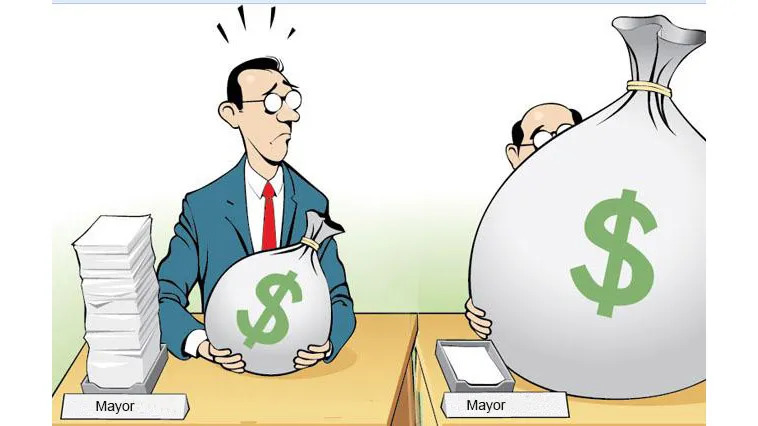
Local Residents May Vote Again on Compensating Their Elected Leaders
Trevor Phipps
During the last election in November, residents supported a spree of ballot questions by substantial margins, mostly dealing with a few technical issues and charter amendments.
For example, voters opted to give the city clerk more time to process signatures in the event of a recall and the residency requirements for serving on the city council were extended from one to two years.
And in a recent meeting, council agreed to keep the ball rolling in the ballot arena by adding more charter-related questions at the next regular election April when the mayoral position and four council seats will be decided.
This time around, possibly three more questions could appear on the ballot, including a proposition that has been tried in the past with little success: Should members of the city council and the mayor receive some type of financial compensation for their service.
This question was last attempted in 2020, with the plan failing by more than 900 votes. In fact, only 613 voters said “yes” to the city council pay plan, versus 1,521 residents that voted “no.”
At the time, the ballot measure was supported by late former mayor Val Carr. Carr’s argument was that offering pay would increase the pool of possible candidates for city representatives. Since serving on the city council is currently an all-volunteer position, the council and mayor seats usually go to those who are retired or don’t have a normal 9-5 job.
However, even five years ago, other council members fought against the idea. Former Mayor Hillary LaBarre spoke out against pay for city council, saying that it was her civic duty to serve and it was an unnecessary burden on taxpayers.
The argument has once again hit center stage, but no comments were made either way during the initial posting of this possible ballot proposition. This time, though, the ballot measure has proposed a specified amount of pay each position will receive, unlike the previous ballot question that left the amount up to council to decide.
If the ballot question is passed, all Woodland Park City Council members, the mayor pro tem and the mayor will receive salaries. However, the amounts will be far from a living wage.
If passed, the city’s proposed ordinance sets the pay for mayor at $800 per month. The mayor pro tem would make $700 a month, and all other council members would rake in $600 per month.
Woodland Park Is an Oddity in Not Paying Local Leaders
Even though Woodland Park voters haven’t seemed to like the idea of paying their council members, other municipalities in the Pikes Peak region do opt to pay those who sit on the dais. At the same time, many municipal government observers argue that big cities, such as Colorado Springs, should be paid much more for their duties.
In the Ute Pass region, Green Mountain Falls and Woodland Park have historically not paid those who sit on their town’s head elected leadership panels. But city council members and the mayors in Cripple Creek and Victor do receive a stipend. And oddly enough, this idea of a paid council and mayor has never received much opposition in either community. Victor once toyed with the idea of a strong mayoral government, such as what now occurs in Colorado Springs and Pueblo, but this idea was defeated.
In Cripple Creek, the mayor and city council members get paid a standard rate of $77.99 per hour. Council members get paid for six hours per week which equals around $24, 300 per year. The mayor in Cripple Creek gets paid for nine hours a week totaling about $36,500 annually. This rate is much higher than what it was when the measure was first approved by the voters.
In fact, the civic leaders in Cripple Creek actually make more than the council members in Colorado Springs. In the Springs, city council members are paid $6,250 per year, but the mayor, who also acts as the city manager, makes more than $100,000. In Denver, council members bring in a decent living wage of over $110,000 annually.
In fact, the idea to raise the pay for Colorado Springs city council members has also come up a number of times. But just like in Woodland Park, Colorado Springs voters also strongly defeated ballot measures that asked for raising city council pay.
Many current and former Colorado Springs city council members have argued that the stipend for council members should be raised to a livable wage, such as several other Colorado cities. In fact, Colorado Springs sits on the bottom of the list for council pay in the state even though it is Colorado’s second largest city.
Proponents of upping the pay for Springs’ council members have used some of the same arguments tried in Woodland Park. How these arguments will fare in 2026 in the next Woodland Park election is still unclear.
Other ballot questions, proposed by thecity’s charter review committee, deal with changing outdated language in the city ordinances and giving city council members targeted by a recall effort more time to resign before facing an ouster election.